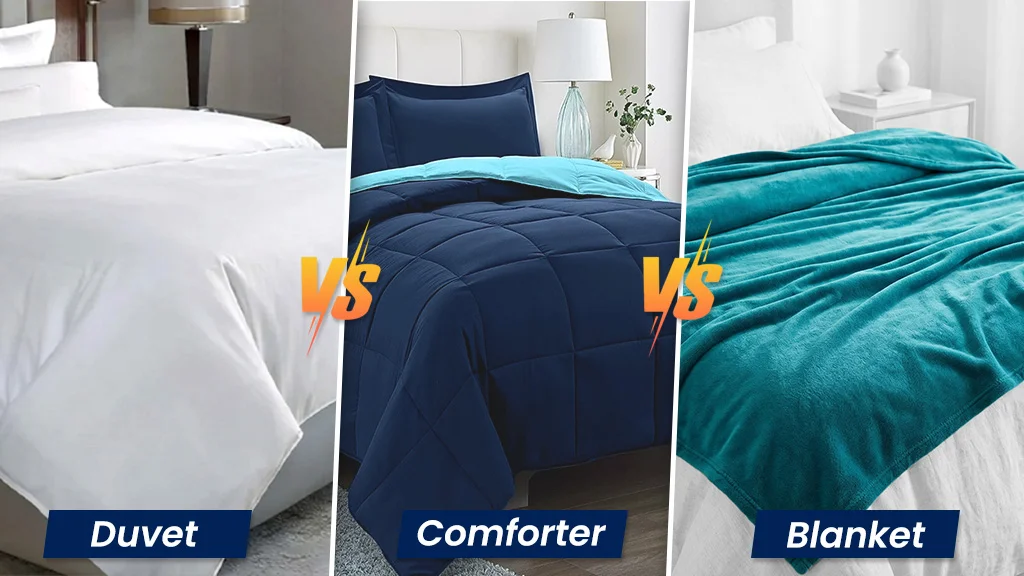
A well-chosen top-of-bed setting does more than provide warmth—especially when managing guest comfort through variable Canadian seasons, from freezing winters to mild coastal summers. Whether a property opts for the breathable layering of a woven blanket, the consistent profile of a quilted comforter, or the high-loft luxury of a duvet set, each choice carries specific implications for perceived value and operational efficiency.
This guide analyzes the technical and aesthetic differences between these three bedding essentials to help you select the most effective solution for your guest rooms.
What is a Duvet?
A duvet consists of a quilted insert filled with down, feathers, or synthetic down-alternatives and a separate, removable protective cover. This construction creates a cloud-like appearance and feel, providing maximum thermal insulation without the physical weight of multiple heavy layers.
The inner fill remains protected from direct guest contact or dust particles as it is protected by the cover. Therefore, it maintains loft and hygiene for a longer period between cleaning cycles.
What Hospitality Businesses should buy Duvets?
1.Luxury Hotels and Boutique Resorts:
Properties aiming for a high-perceived-value aesthetic should choose duvets. It’s signature fluffy look and high-loft insert give a superior level of comfort that aligns with upscale branding.
2.Properties with Frequent Decor Updates
Properties that update decor often can easily refresh a room’s colors or seasonal theme by swapping duvet covers instead of replacing entire bedding units. This makes duvets a cost-effective option.
3.Operations Prioritizing Long-Term ROI:
Laundering a lightweight duvet consumes less water, energy, and drying time than washing a bulky, one-piece comforter.
What is Comforter?
A comforter is a thick bedding piece where the decorative outer fabric and the insulating fill are stitched together into one permanent unit. The internal fill, typically made of polyester or a down alternative, is evenly distributed and held in place by quilted patterns to prevent shifting or clumping over time.
As it does not require an additional cover, the comforter provides a uniform look that stays in place throughout the night. It can be considered a consistent top-of-bed solution in a longer run.
What Hospitality Businesses should buy Comforters?
1.Short-Term Rentals and Airbnbs:
It simplifies the bed-making process for hosts or cleaning crews, ensuring a professional appearance with minimal effort.
2.Limited-Service Hotels and Motels
For operations where turnover speed is the primary focus, the comforter provides a reliable solution that does not involve the labor-intensive process of fitting duvet covers.
3.Properties with Specific Decorative Requirements
Since the design is built directly into the fabric, comforters are ideal for businesses that want to maintain a specific, fixed aesthetic across all guest rooms without the risk of mismatched covers.
What is Blanket?
A blanket is a single-layer bedding piece woven from fibers such as cotton, wool, or high-performance polyester fleece. Unlike duvets or comforters, a blanket does not rely on internal fill. Instead, its warmth is determined by the weight and density of the weave itself.
Blankets are an essential component for moisture-wicking and temperature regulation, whether used as a standalone top layer or tucked between sheets.
What Hospitality Businesses should buy Blankets?
1.Summer Resorts and Warm-Climate Rentals
Properties located in regions where heavy insulation is unnecessary often use blankets as the primary top-of-bed layer. They provide a clean appearance and just enough warmth to keep guests comfortable without overheating.
2.Hospitals and Healthcare Facilities:
Blankets are made of a single layer of durable fabric. Therefore, it can withstand the high-temprature sanitization process required in medical environments. Their low-profile design also makes them easy to store and distribute in large quantities.
3.Budget-Conscious Motels and Shelters
For operations where the replacement cost and drying time are critical factors, blankets offer the best ROI. They dry significantly faster than quilted items, reducing utility costs and allowing for faster room turnover.
Duvet vs Comforter vs Blanket – Meaning & Differences Hotels Should Know
Duvet | Comforter | Blanket |
Insert + removable cover | One-piece quilted bedding | Single-layer woven bedding |
Maximum warmth, fluffy feel | Medium warmth, balanced comfort | Lightweight and breathable |
Wash cover only | Wash entire unit | Easy industrial washing |
Change covers for new look | Fixed design | Simple decorative layer |
Cover protects insert for longer life | Fill may shift over time | Durable for frequent use |
Slower bed-making | Quick to make | Fast tuck and style |
Lightweight but very warm | Medium weight | Thin and lightweight |
1. Construction and Layering
Duvet: By using a separate high-loft insert inside a removable protective cover, the two-piece duvet system offers a distinct mechanical advantage. This modular configuration allows for frequent laundering of the lightweight shell while the bulky core remains protected.
Comforters: The comforter features an all-in-one stitched construction where the internal fill and decorative outer fabric are inseparable. This integrated design ensures the insulation stays perfectly even, providing a consistent, ready-to-use appearance with minimal daily maintenance.
Blankets: Woven fibers like cotton or fleece create the single-layer blanket, a standalone breathable barrier for any bed. This thin construction regulates temperature effectively through superior airflow while maintaining a crisp, low-profile aesthetic in professional settings.
2. Loft and Thermal Insulation
Duvet: The high-loft duvet insert creates a cloud effect that effectively traps maximum heat within its fibers. Property managers can easily swap these inserts to adjust for seasonal temperature shifts while using the same outer covers.
Comforter: A fixed quilted shell holds polyester or down-alternative fills to provide consistent, mid-level warmth. This design maintains a steady temperature across the bed, offering a reliable thermal layer that balances comfort with a streamlined profile.
Blanket: Because of its flat, woven structure, the blanket provides a high-airflow barrier that prevents overheating. This minimal insulation makes it a superior choice for warm climates where breathability is more important than heat retention.
3. Ease of Maintenance and Laundering
Duvet: Washing only the lightweight cover significantly reduces water and energy consumption while the inner insert remains clean. This two-piece system allows for rapid laundering, ensuring a fresh guest experience with minimal utility costs.
Comforter: Laundering the entire quilted unit presents operational challenges due to its significant bulk. These items require large-capacity machines and extended drying times, which can slow down turnover schedules for housekeeping teams during peak periods.
Blanket: Woven blankets survive high-temperature industrial wash cycles and frequent drying without losing their original shape. This exceptional durability makes them a low-maintenance staple for properties requiring a sanitized, long-lasting textile in every room.
4. Aesthetic Versatility and Room Design
Duvet: Buying a duvet set can transform a room’s aesthetics positively. Furthermore, only it’s cover needs to be removed and wash which extends duvet’s overall lifespan
Comforter: Comforters offer a permanent, ready-made look where the pattern and fabric are inseparable. This fixed style ensures a consistent aesthetic across all rooms, though it provides less flexibility for changing seasonal decor.
Blanket: Textured patterns like herringbone or thermal weaves allow the blanket to add visual depth to any bed. These designs provide a sophisticated accent without the bulk associated with heavier, quilted bedding options.
5. Durability and Lifespan in High-Use Settings
Duvet: A sacrificial cover shields the expensive inner fill from direct contact with oils and soils. This protective barrier ensures the core investment remains pristine for years, significantly extending the product’s overall service life.
Blanket: Superior tensile strength allows woven blankets to outlast quilted items in high-traffic environments. These durable textiles withstand daily turnover and frequent mechanical stress while maintaining their integrity over hundreds of industrial wash cycles.
Comforter: Frequent laundering of the entire unit can cause internal fibers to shift or clump over time. This wear and tear eventually degrades the insulation and silhouette, requiring more frequent replacements than single-layer options.
6. Ease of Bed-Making and Turnover Speed
Duvet: While providing a premium guest experience, the duvet requires more labor time to correctly fit and secure the cover. This extra step in housekeeping must be balanced against the high-end aesthetic it creates.
Comforter: A single-piece design simplifies the entire bed-making process, requiring only a quick pull over the surface for a finished look. This one-step application saves valuable labor time during peak check-out periods.
Blanket: Housekeeping teams can achieve a sharp, professional finish quickly by using traditional hospital-corner tucking with flat blankets. This streamlined profile allows for rapid bed-making and efficient room turnover in high-volume environments.
7. Weight and Pressure Preference
Duvet: Maximum volume and warmth are delivered by the duvet without the heavy physical weight of multiple layers. Its lightweight “fluff” provides a high-end feel that feels airy while maintaining superior thermal insulation.
Comforter: Consistent, medium-weight characterizes the comforter, ensuring the bedding stays securely in place throughout the night. This distribution of pressure provides a balanced sleep environment that suits a wide range of guests.
Blanket: A closer, more contoured fit is achieved by the blanket’s dense yet thin structure. This makes it a preferred choice for sleepers who enjoy the feeling of light layering without excessive bulk.
Bedding Solutions from Linen Mart
As a specialized B2B linen supplier, Linen Mart is a trusted partner for Canadian hospitality businesses. We supply duvets, blankets, and comforters to multiple businesses, including hotels, resorts, and vacation rentals. We supply duvets, blankets, and comforters to hotels, resorts, Airbnbs, and healthcare facilities across all Canadian provinces—from Ontario and British Columbia to Alberta and Quebec. We understand that every property has unique operational requirements to maintain commercial inventories that comply with Canadian standards.
Whether you are looking for the durability of single-layer blankets for high-turnover rentals or the premium aesthetic of a duvet system for upscale Canadian suites, explore our commercial catalog to suit your property’s standards with fast, reliable shipping across Canada.
Conclusion:
Choosing between a duvet, comforter, or blanket depends on your property’s specific operational needs, regional Canadian climate considerations, and guest expectations. By balancing thermal performance with maintenance efficiency, you can select a bedding strategy that maximizes durability and enhances the guest experience.