
Winter hospitality is about creating warmth from the moment a guest enters the room. In Canada, where temperatures can fall dramatically and winter travel often means snow, freezing conditions, and long days outdoors, comfortable bedding becomes an important part of the guest experience. Hotels, resorts, B&Bs, and vacation rentals need bedding that feels inviting while remaining practical enough for regular hospitality use.
A thoughtful winter bedding setup can combine several layers, allowing guests to adjust their comfort without relying on a single heavy product. From a soft mattress foundation to a warm duvet and an extra blanket, each layer can contribute to a more comfortable night’s sleep.
3 Key Takeaways:
- Build winter warmth through flexible layers, not bulk alone.
- Choose bedding that balances comfort, durability, and easy care.
- Stock versatile linens that suit changing guest preferences.
1. Vellux Blankets: A Lightweight Layer for Cold Nights
A winter guest does not always need a heavier comforter. Sometimes an additional blanket is all that is needed to make a room feel considerably more comfortable.
Vellux blankets are useful for this purpose because they can add warmth without creating the bulk associated with some heavier winter bedding. They can be placed at the foot of the bed, offered as an extra layer, or kept available for guests who prefer additional warmth.
Material for Winters
For winters in Canada, Vellux Blanket is made from nylon and features a 240 GSM is a perfect construction. It is designed to be lightweight, wrinkle resistant, and machine washable. The material is also described as non-porous and hydrophobic, making it a practical option for hospitality and residential environments.
Vellux Blanket Dimensions for Hospitality
The blanket is available in:
- Twin
- Double
- Queen
- King
Why It Works for Canadian Hospitality
For hotels and vacation rentals, lightweight supplemental bedding can provide flexibility without requiring every guest room to be fitted with an exceptionally heavy comforter.
That makes Vellux an interesting option for properties that want to give guests another warmth layer while keeping handling and storage relatively manageable.
2. Microfiber Comforters: Soft Warmth Without Excess Bulk
A comforter is often the first piece of bedding guests notice when they enter a room. During winter, it needs to look inviting while providing enough warmth for a comfortable night’s sleep.
Premium Quilted Microfiber Comforters offer a combination of softness, warmth, durability, and easy care. The microfiber construction is designed to feel soft and cozy while providing warmth without becoming excessively heavy.
Built for Everyday Hospitality
Regular hotel use can be demanding on bedding. Comforters are exposed to repeated use, laundering, storage, and room turnover, so durability matters alongside appearance.
This microfiber comforter is positioned as resistant to wear and tear and suitable for frequent washing while maintaining its softness and appearance.
Room Sizes and Color Choices
Common hospitality sizes include:
- Twin – 66″ × 90″
- Double – 80″ × 90″
- Queen – 90″ × 90″
Color options include White, Navy Blue, and Dark Grey.
A Practical Winter Role
A microfiber comforter can serve as the primary top layer for a winter bed, particularly when paired with an optional blanket for guests who want additional warmth.
This makes it suitable for properties looking for a balance between a cozy guest experience and practical housekeeping.
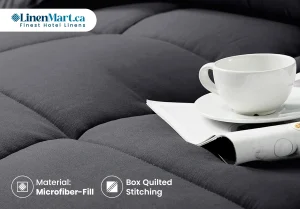
3. Duvet Inserts: The Flexible Core of a Winter Bed
For many hospitality properties, the duvet is the centre of the bedding system. Unlike a standalone comforter, a duvet setup separates the inner warmth layer from the washable outer cover.
This gives hotels more flexibility when managing guest-room bedding.
Inside the Duvet
Premium Microfiber Duvet Inserts use microfiber fill and are described as soft, breathable, lightweight, and suitable for all-season use. Quilted stitching adds structure and helps support durability, while the machine-washable construction makes routine care more practical.
Sizing for Different Room Types
Hotel-friendly sizes are:
- Twin – 66″ × 90″
- Double – 80″ × 90″
- Queen – 90″ × 90″
- King – 104″ × 90″
They are perfect in white for winters, making them easy to incorporate into a traditional hotel bedding presentation.
Why the Cover Is Just as Important
The duvet cover acts as the clean, washable exterior of the bedding system. It can be changed between guest stays while the insert remains part of the property’s reusable inventory.
For winter, the duvet can act as the primary warmth layer, while a separate blanket can be added for guests who prefer a warmer sleep environment.
4. Quilted Mattress Pads: Comfort Starts Beneath the Sheets
Winter bedding is often associated with what goes on top of the bed, but the layers underneath can also influence how comfortable the mattress feels.
A quilted mattress pad creates an additional layer between the mattress and sheet, adding cushioning while helping create a softer sleeping surface.
What Goes Into the Pad?
The Premium Fitted Quilted Mattress Pad uses 3 oz polyester fill and a small diamond quilt pattern. Its fitted construction is designed to stay securely around the mattress, while the material is described as soft, cozy, breathable, and suitable for rigorous hospitality use.
The collection includes multiple fitted sizes, including a Queen measuring 60″ × 80″ × 12″.
Why It Matters During Winter
A quilted mattress pad should not be considered a replacement for a duvet or blanket. Instead, think of it as part of the comfort foundation.
It can add cushioning and a slight insulating layer beneath the sheets, helping create a more inviting bed without making the upper bedding unnecessarily heavy.
An Operational Advantage
A well-fitted mattress pad can also help protect the mattress from everyday use. For hotels and vacation rentals, that makes it relevant not only to guest comfort but also to long-term mattress care.
5. Flannel Fleece Blankets: Softness for the Coldest Stays
When winter temperatures become particularly harsh, some guests want bedding that feels immediately warm and cozy.
Flannel fleece is well suited to that type of experience. The soft surface creates a comforting feel while the lightweight construction makes it easier to layer over existing bedding.
Designed for Warmth and Everyday Use
Flannel Fleece Blankets are described as soft, cozy, warm, and lightweight, with construction intended for hospitality use. They are also designed to withstand frequent washing while maintaining their shape.
Choose a Size That Fits the Room
Common hotel bedding sizes are:
- Throw – 54″ × 90″
- Twin – 66″ × 90″
- Queen – 90″ × 90″
And the colors include Navy Blue, Teal, Dark Grey, and Pink.
A Useful Addition for Winter Properties
These blankets can work particularly well in ski resorts, mountain accommodations, northern hotels, B&Bs, and vacation rentals where cold-weather comfort is an important part of the guest experience.
Rather than making every bed excessively warm, properties can keep fleece blankets available as an optional additional layer.

Building a More Flexible Winter Bedding System
The strongest winter bedding setup does not depend on a single product. It relies on layers that work together.
A hotel bed might begin with a quilted mattress pad and mattress protector, followed by fitted and flat sheets. A duvet insert and cover or a comforter can then provide the main warmth layer. An additional Vellux or flannel fleece blanket can be available for guests who want more insulation.
This approach provides flexibility without forcing every guest to sleep under the same amount of bedding.
For hospitality businesses, it also means individual products can be added or replaced without redesigning the entire bed setup.
What Hospitality Businesses Should Consider Before Buying Winter Bedding
Seasonal bedding decisions affect more than guest comfort. They also influence housekeeping, storage, laundry management, and purchasing.
Laundry Capacity
Winter products can sometimes be heavier or bulkier than standard linens. Hotels should make sure new bedding works with their existing washing and drying processes.
Linen Storage
Additional blankets and seasonal bedding require storage space. Lightweight products can be helpful for properties trying to add warmth without significantly increasing their linen-room footprint.
Durability
Frequent room turnover means many hospitality textiles will be washed repeatedly. Product construction and expected laundering requirements should therefore be considered before purchasing.
Room and Bed Sizes
Standardizing bedding dimensions can make it easier for housekeeping teams to identify which products belong in each room and replace them when necessary.
Guest Temperature Preferences
Some guests sleep warm while others prefer more layers. Providing optional blankets is one of the simplest ways to accommodate those differences.
Preparing Hotels and Vacation Rentals for Canadian Winter
Winter linen planning should begin before temperatures reach their lowest point.
A seasonal review gives housekeeping and purchasing teams an opportunity to inspect existing bedding, identify worn products, verify sizes, and determine whether additional blankets or warmer layers are needed.
Properties in colder regions may require a stronger emphasis on supplemental blankets, while hotels in milder areas may be able to rely primarily on their standard duvet and comforter systems. As part of this preparation, hospitality businesses can explore Linen Mart’s range of commercial bedding and winter-ready linen products to evaluate options that align with their room requirements, guest expectations, and operational needs.
The objective is not simply to buy more bedding. It is to create a well-planned, flexible system that keeps guests comfortable without making operations unnecessarily complicated.
Final Thoughts
Winter bedding for Canadian hotels, resorts, and vacation rentals is ultimately about balancing warmth with flexibility.
Vellux and flannel fleece blankets can provide optional extra warmth, while microfiber comforters and duvet inserts can serve as primary bedding layers. Quilted mattress pads add cushioning beneath the sheet, while bedsheets provide the layer guests experience directly. Pillows and protectors complete the sleeping environment.
The best winter setup will depend on the property’s climate, room type, guest expectations, laundry capabilities, and storage capacity. By combining the right layers rather than relying on a single heavy product, hospitality businesses can create guest rooms that feel warm, comfortable, practical, and ready for the Canadian winter.