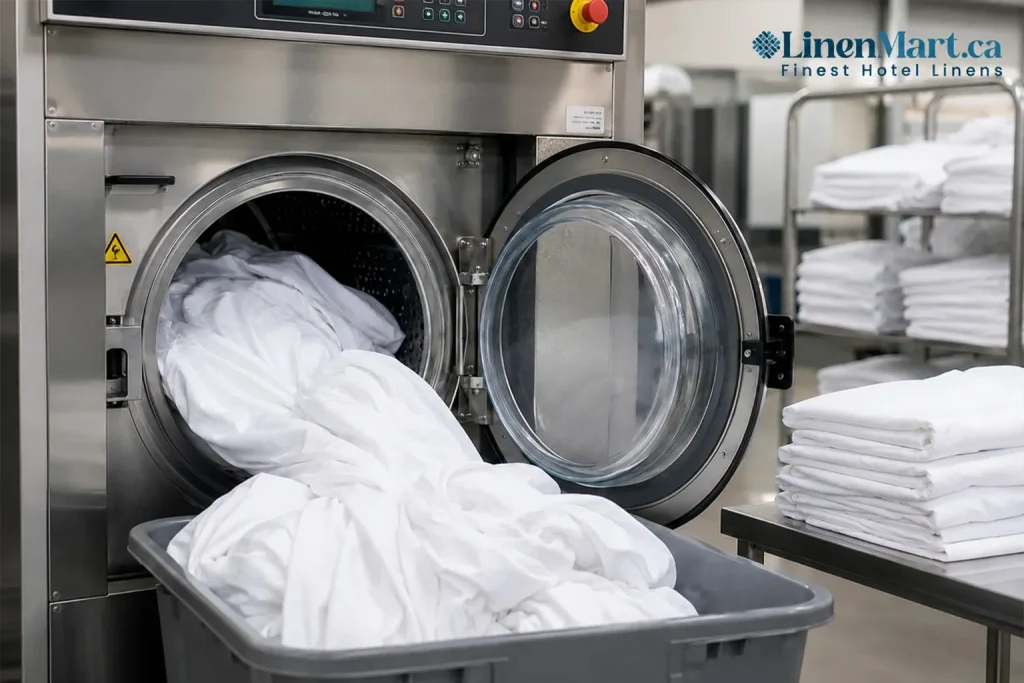
In reality, the signature look and feel of hotel bedding stems entirely from operational discipline, precise chemistry, and industrial laundering science. At Linen Mart, tracking these commercial laundering standards helps clarify how commercial fabrics withstand high-volume processing. By understanding the mechanical and chemical processes used in commercial facilities, anyone can replicate the clean, sharp standards of professional hospitality properties
Key Takeaways:
- Hotels maintain pristine cleanliness by stripping beds after every check-out and using a 3:1 par level system to give fibers a recovery period.
- Commercial laundering relies on a precise multi-stage process—flushing, alkaline breaking, sudsing, and souring—rather than just mixing soap and water.
- Properties avoid harsh household chlorine bleach, instead utilizing oxygen-based brighteners to protect the tensile strength of the fabric.
How Do Hotels Wash White Sheets? Inside the Industrial Laundry Process
Commercial laundry operations bear very little resemblance to residential washing. To handle the volume and stain diversity of a hospitality property, facilities rely on heavily automated, programmable infrastructure.
Temperature Control
Industrial washers run cycles at precise temperatures tailored to the specific soil level. To completely break down body oils, cosmetics, and sweat, water temperatures typically reach 60°C (140°F). This thermal sanitization ensures deep cleanliness that domestic machines struggle to match.
Multi-Stage Wash Cycles
A standard commercial wash cycle does not simply mix water and soap. To achieve maximum hygiene and stain extraction without compromising the fabric, facilities rely on a highly calculated chemical and mechanical sequence.![Hotel Bedsheet Multi-Stage Washcycle [Step by Step] - Linen Mart](https://linenmart.ca/wp-content/uploads/2026/07/Hotel-Bedsheet-Multi-Stage-Washcycle-Step-by-Step-Linen-Mart-300x150.webp)
1. The Flush
Before any detergents are introduced, the cycle begins with a preliminary rinse known as the flush. Operating at a moderate temperature—typically around 38°C to 45°C (100°F to 113°F)—this stage uses high water levels to loosen, dissolve, and carry away water-soluble soils like sweat, blood, and loose debris.
Skipping this step and moving straight to hot water would permanently cook organic proteins into the fabric fibers, setting the stains forever.
2. The Break
Once loose surface soils are removed, an alkaline solution (often sodium metasilicate or orthosilicate) is injected into the wash wheel. This stage significantly raises the pH level of the water, transforming it into an aggressive cleaning environment.
The high alkalinity swells and opens up the tightly woven cotton fibers, allowing embedded body oils, greases, and deep-set lipids to be chemically loosened and released from the yarns.
3. The Suds
With the fabric fibers open and the soils loosened, commercial-grade surfactants and detergents are introduced. This step relies on specialized emulsifiers that isolate, lift, and trap the suspended oils and dirt particles, holding them in the water solution so they cannot redeposit back onto the clean linens. The temperature during this phase often peaks to maximize chemical activation.
4. The Sour (pH Balance)
After the rinsing cycles clear out the suspended soils, a critical step called “souring” takes place. Because the previous steps relied on heavy alkalis, any remaining chemical residue would leave the sheets feeling stiff, looking gray, and causing skin irritation for guests.
During the final rinse, a mild acidic agent is precisely injected to neutralize these alkaline residues, successfully bringing the fabric back to a skin-neutral pH level between 5.5 and 6.5. This structural reset prevents chemical yellowing during the drying process and keeps the linens soft to the touch.
Do Hotels Bleach Sheets? The Secret to Lasting Whiteness
A common assumption is that properties maintain bright linens through heavy doses of standard household bleach. However, harsh chemical application is the fastest way to ruin a commercial textile investment.
So, how do hotels keep sheets white without destroying them?
Instead of standard liquid chlorine bleach—which weakens the tensile strength of cotton fibers and causes synthetic threads to turn yellow over time—professionals utilize oxygen bleach or precisely metered hydrogen peroxide compounds. These agents activate at specific high temperatures during the wash cycle. They lift organic stains and brighten whites effectively while keeping the underlying fabric structural integrity intact.
The Technical Reason Behind Crisp Hospitality Bedding
The signature, smooth snap of a hotel sheet is rarely the result of heavy laundry starch, which can irritate guest skin and stiffen fabrics uncomfortably. Instead, the secret lies in the finishing department.
Commercial facilities feed linens through massive, industrial rotary ironers known as calender irons. Sheets are pulled out of the extractor while still slightly damp (around 15% to 20% moisture retention) and fed directly into these heated, pressurized rollers. The combination of intense mechanical pressure and immediate heat instantly flattens the individual yarns, locks the fabric weave in place, and removes every microscopic wrinkle. This process creates that distinctive, smooth-glide texture that defines high-end accommodations.
Operational Precision Beats Material Secrets
Achieving crisp, impeccably white bedding is not a matter of luck or hidden fabric treatments. It is an exact science combining water temperature management, controlled chemical pH balance, and professional pressing infrastructure. By focusing on deep oil extraction, avoiding harsh chemical buildup, and applying flat heat while fibers are damp, hospitality operations consistently deliver pristine results every single night.
Are Hotel Bed Sheets Clean? Understanding Hospitality Standards
A major factor in the presentation of hotel bedding is absolute cleanliness. High-volume properties maintain rigid operational protocols to ensure hygiene.
- Rigid Turnover Schedules: Rooms are stripped completely, and all linens are sent to the laundry facility after every single guest checkout.
- The Power of Par Levels: Commercial operations do not wash and immediately place the same sheet back on a bed. Properties maintain a strict “par level” inventory system (usually a 3:1 or 4:1 ratio per bed). This allows laundered fabrics a vital rest and hydration recovery period between uses, reducing fabric degradation over time.
- Preventative Laundering: Even if a room remains unoccupied for a specific duration, rotation schedules ensure that dust and ambient moisture do not compromise the cleanliness of the bed.
Conclusion
Achieving crisp, impeccably white bedding is not a matter of luck or hidden fabric treatments. It is an exact science combining water temperature management, controlled chemical pH balance, and professional pressing infrastructure. By focusing on deep oil extraction through a structured wash sequence, avoiding harsh chemical buildup, and applying flat heat while fibers are damp, hospitality operations consistently deliver pristine results every single night. For any property or individual looking to replicate these results, success relies entirely on mastering this disciplined laundering process.