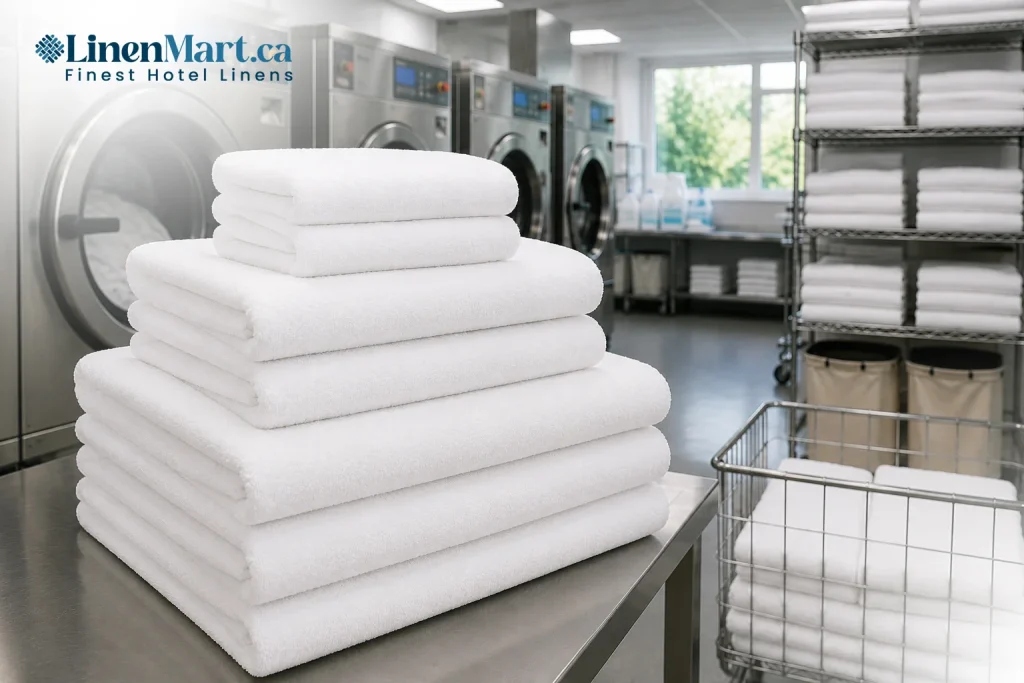
Step into any premium hotel bathroom, and the first thing you notice is the crisp, blindingly bright stack of plush towels. They look pristine, smell fresh, and feel impossibly soft.
Yet, when we try to replicate this at home, our white towels often turn a sad shade of dingy gray or yellow after just a few trips through the wash cycle.
How do hotels keep their towels white use after use, guest after guest? It isn’t magic, and it isn’t about buying new linens every week. Hospitality laundries rely on a strict, scientific process rooted in chemistry, temperature control, and fabric care.
Here are 5 operational laundry tricks hotels use to maintain that signature brightness—and how you can replicate them at home.
1. Absolute Segregation in the Wash Cycle
The first rule of commercial laundry management is flawless sorting laundry. In a residential setting, it is tempting to throw white towels in with white socks, t-shirts, or even light-colored hand towels. Hotels never do this.
When you mix different fabric types and soil levels, a process called soil redeposition occurs. Dirt and microscopic dye particles break free from one item and settle onto another. Furthermore, hotels closely monitor commercial washing machines to ensure they are never overloaded. Overloading reduces fabric friction, meaning the machine cannot mechanically agitate the dirt out of the fibers, leaving towels looking dull and gray.
2. Eliminating Mineral Buildup from Hard Water
One of the biggest culprits behind fading whites is unseen: your water supply. Hotels invest heavily in commercial-grade water softener systems because they understand the physics of mineral buildup.
Hard water contains high concentrations of calcium and magnesium. When these minerals mix with laundry detergent, they create a curd-like soap scum that attaches to cotton fibers like a magnet. This scum traps dirt, stiffens the fabric, and causes severe fabric yellowing. By treating the water first, hotels ensure that detergents can dissolve fully and rinse away completely, leaving no hard water stains or residue behind.
3. The Three-Step Chemical Formula
Many people assume hotels just dump gallons of harsh chlorine bleach into the machine. In reality, heavy chlorine usage ruins cotton, weakens the fibers, and actually turns towels yellow over time due to a chemical reaction with body proteins. Instead, hotels use a precise chemical triad:
- Step A: Alkaline Detergents: An alkaline wash raises the pH of the water, which swells the cotton fibers and coaxes them to release trapped oils, grease, and organic soils.
- Step B: Target Brighteners: Hotels favor oxygen brighteners (hydrogen peroxide-based) over chlorine bleach. Oxygen bleach safely breaks down organic stains without degrading the structural integrity of the fabric.
- Step C: The Laundry Sour: This is the ultimate industry secret. In the final rinse, commercial laundries introduce a mild acidic agent known as a “laundry sour.” This neutralizes the pH balance, strips away residual alkalinity from the detergent, and stops the chemical reactions that cause yellowing.
4. Strict Temperature Control and Thermal Sanitization
To achieve deep stain removal and total thermal sanitization, hotels carefully regulate their wash temperature.
Body oils, sweat, and cosmetics do not dissolve in lukewarm water. Hospitality laundries wash white cotton linens at high temperatures—typically between 60°C and 71°C (140°F to 160°F)—to melt away oils and kill bacteria.
However, they do not just dump hot water out and add cold water. A rapid drop in temperature can thermally shock the fabric, setting wrinkles and locking in any lingering stains. Commercial machines gradually step down the water temperature during the rinse phases to protect the fibers.
5. Smarter Drying to Keep Towels Fluffy
The final secret lies in how hotels handle the dry cycle. You might think hotels over-dry their linens to guarantee freshness, but the exact opposite is true.
Over-drying bakes the delicate cotton fibers, causing them to fray, lose their cotton plushness, and look dull. Hotels use advanced dryers with automatic moisture sensors. They dry the towels until they are just dry, preserving the natural moisture balance of the cotton to keep them fluffy towels.
The Fabric Softener Trap: Hotels strictly avoid commercial liquid fabric softeners. Fabric softeners work by coating fibers with a thin layer of silicone or oil. While this feels soft initially, it builds up over time, waterproofing the towel, reducing absorbency, and locking in gray dirt.
Common Mistakes That Ruin White Towels
Stop making these standard laundry errors to prevent your crisp linens from turning into dingy, scratchy rags:
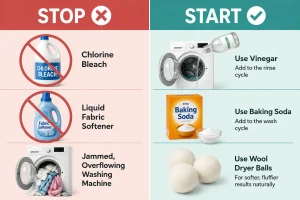
A. Using Liquid Fabric Softeners:
Softeners coat cotton fibers with a chemical film. Over time, this buildup repels water, slashes absorbency, and traps gray dirt inside the fabric.
B. Overloading the Machine:
Packing the drum tight prevents water and detergent from circulating. Without proper movement, lifted dirt cannot rinse away and simply settles back into the towels.
C. Relying on Chlorine Bleach:
Frequent chlorine use chemically degrades cotton fibers, making them thin and rough. Even worse, chlorine reacts with body proteins, locking in a permanent yellow tint.
D. Leaving Wet Towels in the Drum:
Letting damp towels sit creates a breeding ground for mildew. This introduces a stubborn, sour odor and instantly dulls the brightness of the fabric.
The Fix: Ditch the softeners, wash towels in smaller loads, and swap harsh chemicals for a cup of baking soda or white vinegar to naturally lift stains and restore plushness.
How to Replicate the Hotel Formula at Home
You do not need an industrial laundry facility to get these results. Use this simple translation chart to upgrade your residential laundry routine:
Commercial Hotel Tactic | Household Replica |
Industrial Water Softener | Add 1/2 cup of baking soda or borax directly to the drum to boost your laundry detergent and soften hard water. |
The “Laundry Sour” Rinse | Pour 1/2 cup of distilled white vinegar into your fabric softener compartment. The acid neutralizes residual detergent and strips buildup. |
Chemical Fiber Fluffing | Toss 2–3 wool dryer balls into your dryer. They naturally separate the towels during the tumble dry cycle, maximizing airflow without chemicals. |
Strict Sorting Protocols | Wash white towels only with other white towels. No sheets, no underwear, no clothes. |
Why Hotels always prefer White Towels?
The universal choice of white towels in the hospitality industry comes down to three operational reasons: hygiene, psychological trust, and laundering efficiency.
- White fabric cannot hide stains, hair, or dirt. When a guest sees a pristine white towel, it provides immediate psychological reassurance that the room meets strict sanitary standards. It acts as visual proof of excellent housekeeping.
- Unlike colored linens that fade, bleed, or bleach out, white towels can be washed at incredibly high temperatures and treated with heavy-duty oxygen brighteners. This allows hotels to thoroughly sanitize the fabric and achieve total stain removal without ruining the appearance of the linen.
- Hotels process thousands of pounds of laundry daily. By using white towels, sheets, and bathmats across the entire property, the laundry staff can wash everything together in massive, high-capacity loads without the risk of color bleeding, drastically reducing sorting time and operational costs.
The Secret Starts with the Fabric – Why Quality Matters?
No matter how flawless your laundering routine is, you cannot wash premium durability into a poorly made product, which is why starting with a high-quality foundation is essential. Low-grade cotton blends fray, pill quickly, and lose their ability to hold a bright white finish after a few cycles, but Linen Mart offers the perfect white towels to meet this requirement.
Manufactured with high-quality, long-staple cotton loops, Linen Mart towels are engineered for maximum absorbency, exceptional plushness, and commercial-grade strength. Built to withstand high-temperature washes and rigorous stain removal without thinning out, starting with a premium product from Linen Mart ensures your linens stay blindingly bright and incredibly fluffy for the long haul.
Conclusion
Maintaining that pristine, five-star brightness isn’t about using a single magic chemical; it is the result of a disciplined laundering process paired with a premium quality product. By taking control of your water chemistry, ditching synthetic fabric softeners, and starting with commercial-grade linens from Linen Mart, you can permanently break the cycle of dingy, gray fabric. Implement these operational laundry tricks on your next wash day to experience the luxury of blindingly bright, incredibly fluffy towels every single time you step out of the shower.