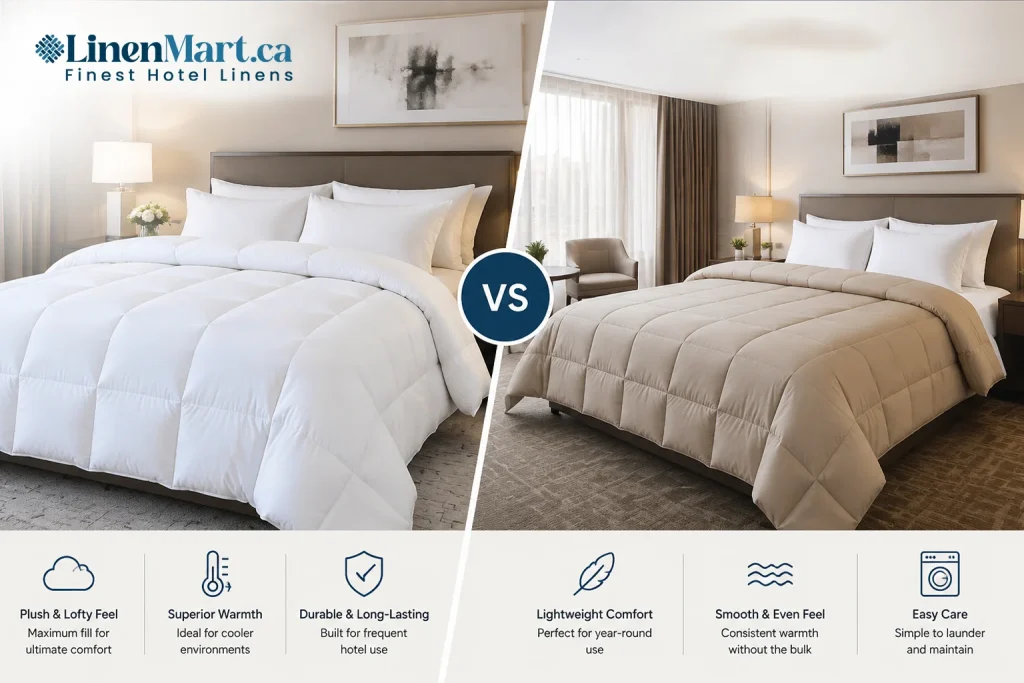
Step into any five-star hotel room, and your eyes are immediately drawn to the bed. It looks impossibly crisp, plush, and inviting—resembling a perfectly sculpted cloud. This flawless presentation is no accident; it is the result of meticulous engineering designed to balance guest comfort with rigorous commercial standards.
When configuring a premium sleep experience, hoteliers face a fundamental decision: do hotels use comforters or duvets? While both options provide warmth, the luxury hospitality industry overwhelmingly relies on a specific bedding system. Here is an insider look at what five-star properties use and the operational reasons behind their choice.
Defining the Contenders:
To understand hotel preferences, it helps to break down the technical differences between these two bedding categories.
What is a Comforter?
A comforter is a single, quilted piece of bedding. The insulating fill is stitched directly into the decorative outer fabric. It does not require a protective layer and is intended to be used and laundered as a single unit.
What is a Duvet?
A duvet is a two-piece system consisting of a plush insert—typically filled with high-loft down or premium down-alternative—and a removable, protective cover. The cover acts like a giant pillowcase, protecting the insert from daily wear and tear.
The Hospitality Standard: Why Luxury Hotels Choose Duvets
If you walk into a luxury resort or a boutique downtown hotel, you will almost always find a duvet system rather than a standard comforter. Hoteliers choose this setup due to strict operational requirements.
1. Unmatched Hygiene and Laundering Efficiency
Hygiene is the top priority in commercial hospitality. Hotel bedding must undergo intense laundering at high temperatures to maintain sanitation standards. Stripping a lightweight duvet cover takes seconds, and housekeeping staff can wash dozens of covers simultaneously in standard commercial machines.
Conversely, laundering bulky, one-piece comforters after every single check-in is operationally impossible for a fast-paced housekeeping department. It strains industrial machinery and slows down room turnover times significantly.
2. Maximum Loft and the 5-Star Aesthetic
Luxury properties sell an experience, and a flat, wrinkled bed fails to deliver on that promise. Duvet inserts offer superior loft and volume compared to one-piece comforters. By selecting inserts with a high Grams per Square Meter (GSM) weight, hotels achieve that signature, puffy aesthetic that makes guests want to dive straight into bed.
3. Superior Operational ROI
In a high-turnover commercial environment, accidents happen. Stains from coffee, makeup, or room service can ruin fabrics instantly. When a duvet system gets stained, the property only needs to replace or treat the relatively inexpensive outer cover. The costly, high-quality insulating insert remains protected inside. If a traditional comforter gets stained or torn, the entire unit must be discarded, driving up replacement costs.
4. Optimizing Housekeeping Workflows
Every minute saved during room turnover directly impacts hotel profitability. Modern hospitality duvet covers are designed with specific operational shortcuts—such as hand-holes, wide openings, and internal corner ties. These technical features allow housekeeping staff to change covers rapidly, a process that is significantly more efficient than handling, folding, and smoothing heavy, one-piece comforters across a king-size bed.
5. Adapting to Seasonal Climate Controls
Luxury properties must cater to guest comfort across shifting seasonal temperatures without storing multiple sets of bulky bedding. A duvet system solves this challenge through modular adaptability. Properties can keep the same lightweight outer covers year-round and simply swap out the inner inserts—utilizing a lower weight for summer cooling and a denser fill for winter insulation.
6. Mitigating Long-Term Capital Expenditures
Bedding in the hospitality industry faces intense wear, tear, and chemical exposure from industrial laundering. When a traditional comforter suffers fiber degradation or permanent staining, the entire asset must be written off and replaced. With a duvet system, the expensive insulating core is shielded from the wash cycle. Properties only replace the outer textile layer when wear occurs, significantly lowering annual linen replacement costs.
7. Sustaining Hypoallergenic and Allergen-Free Environments
Premium properties prioritize guest wellness and air quality. Traditional comforters often trap dust mites, dander, and allergens within their permanently attached shells, making deep cleaning difficult. High-end duvet systems utilize specialized, tightly woven allergen-barrier covers that protect the inner insert. This ensures that guests with sensitivities experience a pristine, reaction-free sleep environment.
Linen Mart’s Duvet & Comforter Catalog
For hospitality buyers looking to implement these exact industry standards, Linen Mart offers a comprehensive commercial collection engineered for durability, high-volume laundering, and superior guest comfort.
Duvets
- Duvet Inserts: Engineered with resilient, commercial-grade down-alternative fills that maintain their exceptional loft and cloud-like volume even after hundreds of industrial wash cycles.
- Duvet Covers: Woven with high-tensile strength fabrics designed for rapid housekeeping stripping and excellent stain resistance.
- Duvet Cover Set – Plain: A complete, classic white hospitality setup that delivers a clean, five-star aesthetic while streamlining inventory management.
Comforters
- Economy Comforters: Cost-effective, budget-friendly options designed for high-turnover properties, offering reliable warmth and straightforward maintenance.
- Premium Quilted Microfiber Comforters: Featuring a sophisticated box-stitch design to prevent fill shifting, these provide an excellent balance of softness and long-term structural integrity.
- Microfiber Reversible Comforters: Versatile, dual-sided bedding options that allow properties to quickly refresh room aesthetics by simply flipping the top layer.
When Do Hotels Ever Use Comforters?
While duvets dominate the luxury segment, traditional comforters still have a place in certain sectors of the lodging industry.
- Economy and Budget Motels: Lower-tier properties frequently use patterned, polyester comforters. These colored fabrics hide stains easily, allowing properties to reduce upfront linen costs and skip the process of changing covers between short stays.
- Themed Boutique Properties: Some boutique spaces opt for specific, heavily styled comforters or coverlets to match a rustic or historic aesthetic where a crisp white duvet might feel out of place.
Do upscale lodging properties select duvets over comforters?
Yes. Premium properties overwhelmingly choose duvets rather than traditional comforters. A duvet system utilizes a removable cover that housekeeping can strip, wash, and replace instantly between guests. This provides a level of pristine sanitation and operational efficiency that bulky, one-piece comforters simply cannot match in a fast-paced commercial environment.
Is a duvet or a comforter the standard choice for luxury properties?
The duvet is the definitive standard choice for luxury properties. Beyond the obvious hygiene benefits of a washable cover, duvets allow properties to use high-loft, premium down-alternative inserts. This specific setup yields the signature, ultra-plush “cloud-like” bed aesthetic that guests expect from a high-end hospitality experience.
Conclusion
Ultimately, the preference for duvets in premium properties comes down to a perfect balance of guest satisfaction and operational logic. While traditional comforters serve a purpose in low-maintenance or budget environments, they lack the flexibility required by modern hospitality brands. Investing in premium duvet inserts paired with easily exchangeable covers allows properties to protect their linen investments, maximize housekeeping efficiency, and deliver the pristine, high-loft sleep experience that defining brands rely on to secure guest loyalty.