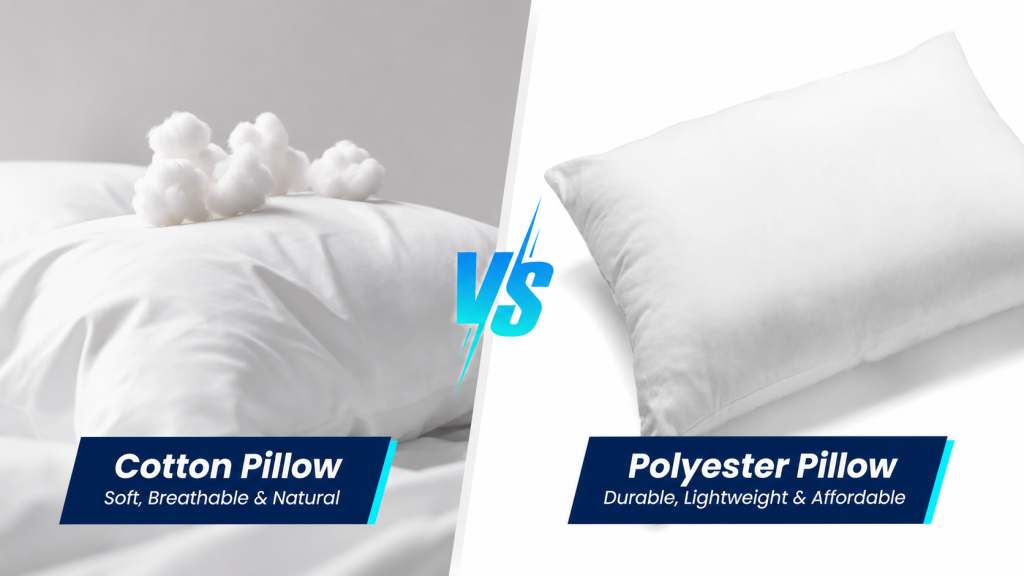
Cotton pillow vs polyester pillow selection remains a critical decision for procurement managers balancing guest satisfaction with operational ROI. Choosing between cotton and polyester pillow options requires a deep understanding of fiber performance under industrial stress. While the debates often focus on initial unit cost, the long-term value lies in laundering efficiency and loft retention. This guide analyzes polyester vs cotton pillow specifications to help your facility optimize its bedding inventory for both guest comfort and high-volume durability.
7 Differences Between Cotton & Polyester Pillows:
These are the main points that differentiate polyester pillow vs cotton options:
1. Thermal Regulation – Cotton Pillows
The primary differentiator for high-end hospitality is heat dissipation. Cotton is a naturally breathable fiber that allows air to circulate through the core, preventing the heat trap effect common in synthetic materials. For facilities catering to luxury guest expectations, cotton provides a cooler sleep surface that reduces the moisture buildup associated with night sweats.
2. Operational Throughput – Polyester Pillows
In high-volume laundry environments, drying time is a critical cost factor. Polyester fibers are hydrophobic, meaning they shed water quickly during the extraction cycle. This allows these pillows to dry significantly faster than their cotton counterparts. For properties with tight housekeeping turnarounds, this speed reduces energy consumption and ensures inventory returns to service immediately.
3. Loft Retention and Presentation – Polyester Pillows
The visual appeal of a freshly made bed depends on the spring-back of the fill. Siliconized polyester fibers are engineered to resist flattening and clumping even after repeated compression. While cotton may settle into a flatter profile over time, polyester maintains a plump, high-loft aesthetic that signals comfort and freshness to a guest the moment they enter the room.
4. Industrial Durability – Cotton Pillows
When subjected to the high-temperature sanitation cycles required in healthcare and hospitality, cotton construction excels. High-thread-count cotton shells are less prone to pilling or thinning under the mechanical stress of industrial washers. This resilience ensures that the protective casing remains an effective barrier against debris for a longer operational lifespan.
5. Cost-Per-Use Efficiency – Polyester Pillows
While cotton offers long-term durability, polyester provides the most accessible entry point for procurement budgets. The lower initial unit cost allows facilities to maintain a larger back-stock of inventory. For mid-scale hotels or short-term rentals where pillows are replaced frequently due to hygiene protocols, the ROI on polyester remains superior.
6. Hypoallergenic Performance – Cotton Pillows
For guest wellness and healthcare-focused facilities, the natural properties of cotton are a significant advantage. Cotton is inherently non-irritating and, when tightly woven, acts as a natural deterrent to common allergens. Choosing cotton allows managers to market their rooms as allergy-friendly, providing a technical value-add that justifies higher nightly rates.
7. Weight and Handling – Polyester Pillows
The physical weight of bedding impacts both guest preference and staff ergonomics. Polyester fills are significantly lighter than dense cotton alternatives, making them easier for housekeeping staff to handle during bulk linen changes. This lightweight nature also appeals to guests who prefer a cloud-like feel rather than the heavy, grounded sensation of a traditional cotton-fill pillow.
Are Cotton Pillows better than Polyester?
Cotton pillows offer superior breathability and durability, while polyester pillows provide better loft retention and cost-efficiency. Managers choose based on whether their facility prioritizes the cooling comfort of natural fibers or the fast-drying, high-volume performance of synthetic materials.
Which Pillow is better for sleep?
Cotton pillows are generally better for sleep because they offer superior temperature regulation and breathability. Unlike synthetic fibers, cotton allows heat to escape and moisture to wick away, preventing the discomfort of overheating during the night.
Optimizing Longevity through Maintenance and Laundering Protocols
To maximize the ROI of your bedding inventory, maintenance routines must be tailored to the specific fiber profile. Industrial laundering environments provide the ultimate test for any cotton pillow vs polyester pillow selection, and following these technical protocols ensures both hygiene and durability.
1. Temperature Control for Sanitization:
Cotton shells excel in high-heat cycles (60°C or higher), which are essential for eliminating bacteria and allergens in healthcare settings. Conversely, polyester fills require moderate temperatures to prevent the synthetic fibers from melting or slicking, which leads to permanent clumping.
2. Drying Efficiency and Airflow:
While the polyester vs cotton pillow debate often focuses on drying speed, the technique is equally important. Using commercial dryer balls with polyester loads prevents the fill from bunching, maintaining that essential spring-back loft. Cotton requires a longer, steady heat to ensure the dense core is moisture-free, preventing mildew growth during storage.
3. The Protective Barrier Strategy:
Regardless of whether you choose a polyester pillow vs cotton construction, non-negotiable use of commercial-grade, zippered protectors is vital. This sacrificial layer intercepts oils and moisture, allowing the internal hotel pillow to last longer between deep-cleaning cycles and reducing the mechanical wear caused by excessive washing.
4. Chemical Compatibility:
Avoid heavy use of chlorine bleaches on cotton shells, as this weakens the natural fibers over time. For cotton vs polyester pillow maintenance, oxygen-based brighteners are preferred to maintain the crisp, white professional aesthetic without compromising the fabric’s tensile strength.
Linen Mart’s Pillow Collection
Selecting the appropriate bedding inventory requires a balance between guest-facing luxury and back-of-house efficiency. The Linen Mart collection addresses these dual requirements by offering hollow fiber and down-alternative options engineered for the rigors of commercial use. The Economy and Premium Hollow Fiber series utilize high-density stitching and lightweight fills to ensure durability and ease of handling for housekeeping teams.
For higher-tier guest experiences, the luxury down-alternative pillows provide hypoallergenic support and superior loft. Each product is vacuum-sealed to optimize storage space, ensuring that your facility maintains a sanitized, ready-to-use backstock that supports consistent service standards.
Conclusion
Selecting between a cotton pillow and a polyester pillow involves aligning material properties with your specific operational requirements. Luxury facilities and healthcare centers often prioritize the breathability and industrial durability of a cotton vs polyester pillow to ensure guest wellness. Conversely, high-turnover properties benefit from the polyester pillow vs cotton trade-off through faster drying times and superior loft retention. Ultimately, the polyester vs cotton pillow decision should facilitate a balance between guest comfort and laundry efficiency. By auditing your facility’s turnover rate and guest feedback, you can invest in the inventory that maximizes long-term ROI and service standards.