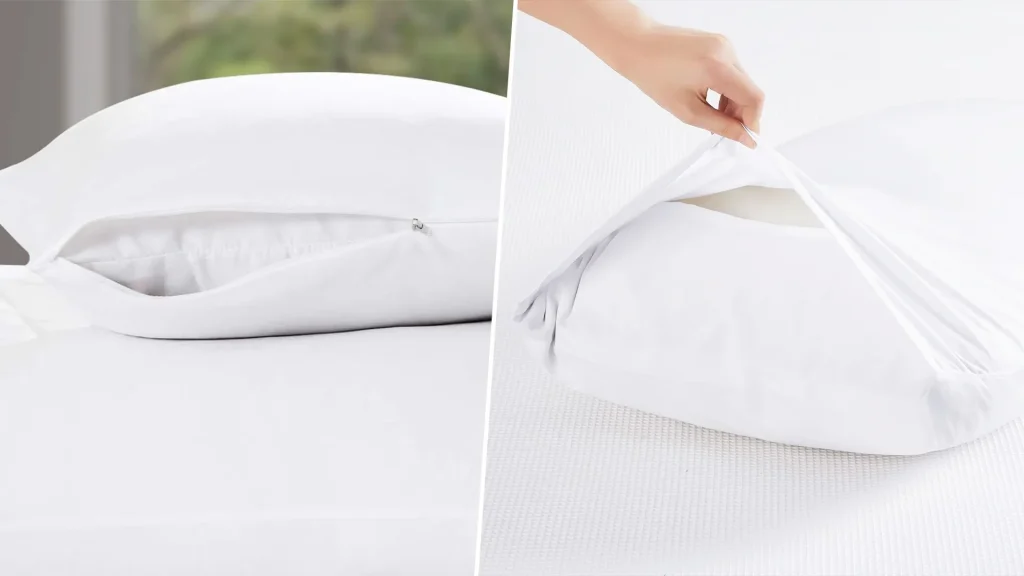
Pillow protectors and pillowcases are an operational investment in commercial environments like hotels, motels, and other short-term rentals. They are high-use assets that directly impact guest satisfaction, along with your costs. Even though both may look similar on a bed, the choice between a pillowcase vs pillow protector is not about either/or, but more of a strategic decision about hygiene, durability, and brand perception.
This blog covers everything people in the hospitality industry should know when buying or comparing pillowcases vs pillow protectors.
Key Takeaways
- Pillowcases are for comfort & presentation only.
- High-quality pillow protectors help extend pillow lifespan and reduce long-term replacement and maintenance costs.
- Using both pillowcases and pillow protectors is the best practice for commercial hospitality environments.
What is a Pillow Protector?
A pillow protector is a removable fabric that encases a pillow entirely. In contrast to pillowcases, pillow protectors act as an invisible barrier between the pillow insert and the outside world. a commercial environment, this is the first line of defense against the following:
- Contaminants: It prevents perspiration, oils, and spills from seeping into the pillow fill, which can cause permanent staining.
- Allergens: Many protectors feature specialized weaves or membranes that block dust mites, pet dander, and pollen from nesting inside the pillow.
- Bed Bugs: High-quality commercial protectors often feature bug-proof zippers with micro-teeth, ensuring that bed bugs cannot enter the pillow core.
What is Pillowcase?
A pillowcase primarily serves 2 main purposes, aesthetics and comfort. It comes in envelop or bag style to be easy to change for the housekeeping team. It is also the final touch of the bed’s presentation. Therefore, its crisp look, style, and thread count are the most important factors when buying them. The following are pillowcases’ core jobs:
- The Soft-Feel: Providing a soft, breathable surface that regulates temperature and ensures a comfortable night’s sleep.
- Design & Branding: Matching the room’s decor, often featuring a specific color, pattern, or the signature “hotel white” that signals cleanliness to a guest.
- Disposable Shielding: Acting as a lightweight barrier against minor surface dirt and hair, designed to be stripped and laundered after every single stay.
Pillowcase vs Pillow Protector – Comparison
Following is the head-to-head comparison of pillowcases vs pillow protectors based on different scenarios and use cases.
Pillowcase | Pillow Protector |
Focuses on presentation and soft touch rather than deep protection. | Acts as a protective barrier that seals the pillow from moisture, allergens, skin cells, and contaminants. |
Requires frequent replacement due to commercial laundering | Highly cost-effective by extending pillow lifespan by about 2–3 times and reducing replacement frequency. |
Contributes directly to the luxurious look and smooth facial contact surface. | Poor-quality protectors may feel hard or produce crinkling noise; high-quality breathable protectors are recommended. |
Should be washed after every guest stay. High thread count and premium material help prevent fading and wear. | Works as a buffer layer and usually requires washing only during stains, odor presence, or deep-clean cycles. |
1. Primary Function
A pillowcase is intended to feel breathable and aesthetically pleasing to the visitor. It has a decorative finish and is also easily swapped out to maintain a fresh look for every new arrival. Other than that, it does not collaborate much with keeping the pillow protected from outer moisture or increasing its lifespan.
A pillow protector functions as a high-performance barrier to seal the pillow insert away from the environment. It handles the back-end logistics of hygiene and encasing a pillow to block out moisture, skin cells, and allergens that a standard weave pillowcase simply can not stop.
2. Durability & Cost Savings
Hospitality businesses prefer goods that are durable and last long-term. However, that is not the case with pillowcases. They are thin, soft, and are also frequently replaced due to commercial laundering. Still, replacing pillowcases is also a more affordable option than replacing the entire pillow.
Pillow protectors help businesses to save on their pillow replacement costs. It increases their lifespan by 2 to 3 times. The best part about its usage is that a single pillow protector’s cost is exponential to a premium, making it a great ROI-driven investment.
3. Guest Comfort

The most important thing visitors notice is the coolness and luxurious look of the pillow. While a pillowcase meets this requirement, a low-quality pillow protector can make the pillow feel hard or bouncy. Lower-end versions also crinkle when guests move. This makes a high quality pillow protector purchase an important element for hospitality businesses.
Even low to medium quality pillowcases can also be great to stop immediate moisture wicking from the skin and give a friction-free surface for the face. Ideally, you should have a combination of both pillow covers and protectors for maximum comfort.
4. Laundering Cycles & Industrial Wear
Pillows are used regularly in accommodation providing businesses. You can simply put the pillowcase in the industrial washer every time without worrying much about the pillow itself. As these covers need to be washed repeatedly, you should prefer ones with a high thread count and premium material. Buying low-quality options can lead to quick color fading and replacement costs as well.
The pillow protectors create a buffer in the pillow’s laundry cycle. It makes sure that the pillow insert would rarely, if ever, need to enter a washing machine.
5. Brand Perception
A crisp & high-thread count pillowcase gives an impressive first brand impression. This needs to be in a color that matches the room’s overall theme and bedding. If it also feels soft on touch, then your pillowcases would be a silent guardian to your brand’s reputation.
Pillow protectors also impact the brand perception, but in a different way. For example, if a guest moves the pillowcase and discovers a stained or aging pillow underneath, the perceived value of the entire stay would plummet instantly. This hidden layer acts as a professional standard to maintain deep hygiene and asset maintenance rather than just surface-level aesthetics.
Best Practice for Commercial Use
These are the standard procedures for most commercial hospitality settings to use pillow protectors and covers:
1. The Sniff & Spot Test
The housekeeping team should inspect protectors during every turnover, while the pillowcase should be laundered after every stay. The protector only needs to be washed if a visible stain or scent is present.
2. Standardized Fit
Ensure your protectors are the exact dimensions of your pillows. A protector that is too small will make the pillow feel like a brick, while one that is too large will bunch up and create uncomfortable ridges under the pillowcase.
3. Inventory Ratios:
Maintain a 3:1 ratio for pillowcases (three cases for every one pillow in the building) to account for laundering cycles. For protectors, a 1.2:1 ratio is usually sufficient, as they do not need to be rotated as frequently as the outer linens.
Do you need both a pillow protector and a pillowcase?
Yes, both are essential for commercial usage. Pillowcases provide an aesthetic surface and is washed daily. On the other hand, pillow protectors act as a shield to block allergens and bed bugs to save businesses on the replacement cost.
How often should you wash pillow protectors vs. pillowcases?
In a commercial setting, pillowcases must be laundered after every guest stay. Pillow protectors, however, act as a secondary barrier. They typically only need laundering if they become physically soiled, hold a lingering scent, or during a deep-clean rotation (usually every 2–4 weeks or upon guest turnover in long-stay rentals).
Conclusion
Choosing between a pillowcase and a protector is unnecessary because professional hospitality requires both. While the pillowcase delivers the immediate luxury and comfort guests crave, the protector secures your investment against stains, pests, and wear. Using them together ensures cost-effectiveness along with a better sleep experience.